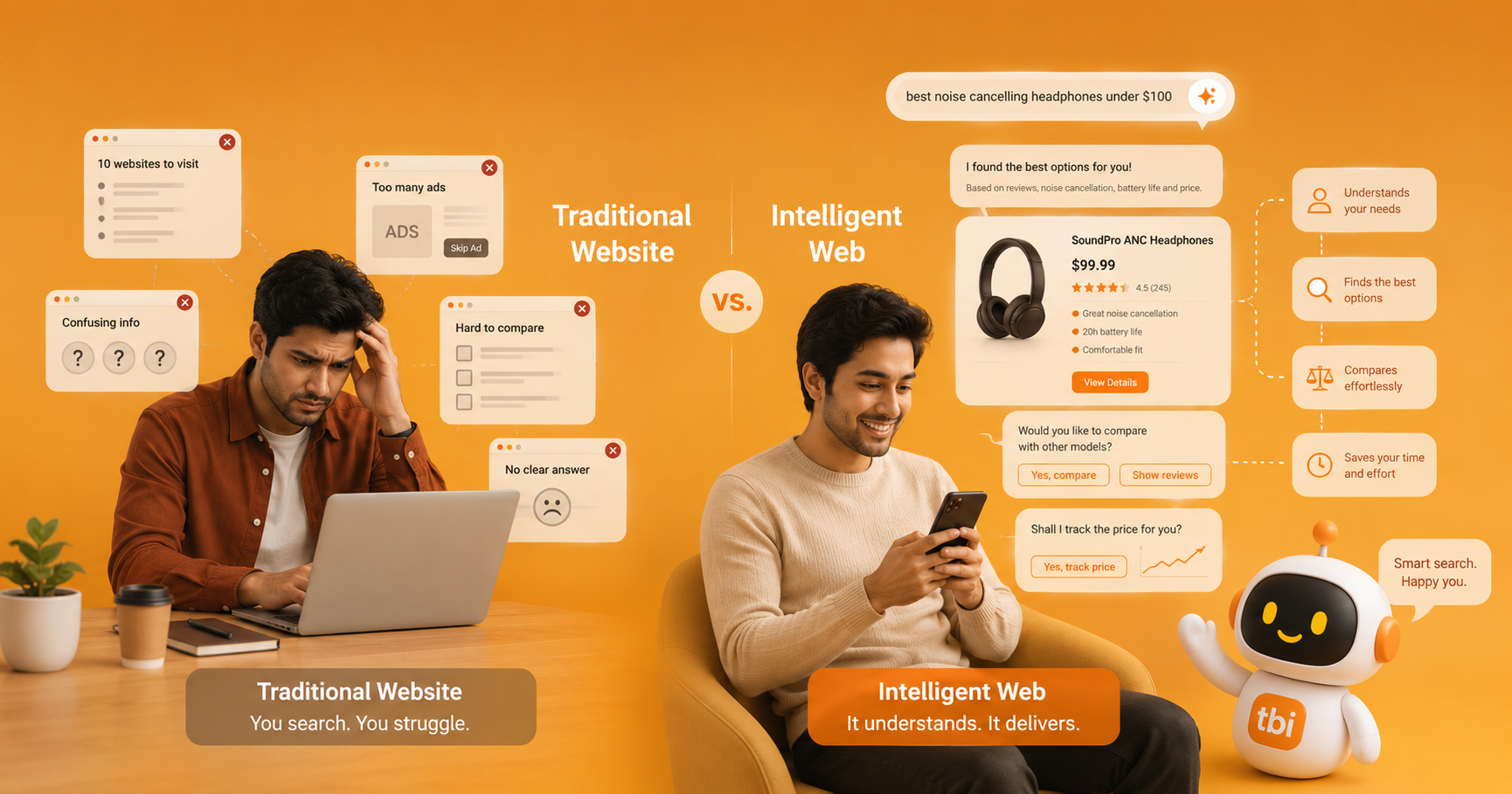
- AI understands intent, not just keywords.
- This defines the traditional vs. intelligent web.
- Traditional sites are static; intelligent sites adapt.
- Five differences: personalization, prediction, conversational search, continuous learning, AI support.
- Businesses must be AI-understandable, not just search-visible.
- Start small, smarter search or a basic AI assistant works. Privacy, cost, and trust still matter.
A few weeks ago, The Brihaspati Infotech ran a simple experiment. Three everyday situations, a parent looking for a reliable clothing vendor, a student searching for the right textbook, and a business owner trying to find local movers — were handed to ChatGPT, one at a time, as short, natural requests. No spreadsheets, no long lists of criteria. Just the kind of thing a person might actually type.
What came back wasn’t a list of links. It was a recommendation, explained. ChatGPT compared options, weighed what each person seemed to actually care about, and narrowed things down. The parent got an answer built around returns and delivery speed. The student got an answer built around edition accuracy and price. The business owner got an answer built around local availability and equipment.
That experiment ended with a question worth sitting with: if AI can understand a request well enough to make a decision on someone’s behalf, what does that mean for the website underneath it all? The answer is the subject of this post. Because what The Brihaspati Infotech observed in that experiment wasn’t really about ChatGPT. It was a preview of a much bigger shift, from the Traditional Web to what’s now being called the Intelligent Web.
What the Vendor Experiment Actually Revealed?
In the earlier experiment, the most telling detail wasn’t that ChatGPT found vendors. Google could have found vendors too, in the form of ten blue links. The telling detail was that ChatGPT understood why each person was searching, and shaped its answer around that reason instead of around the keywords they typed.
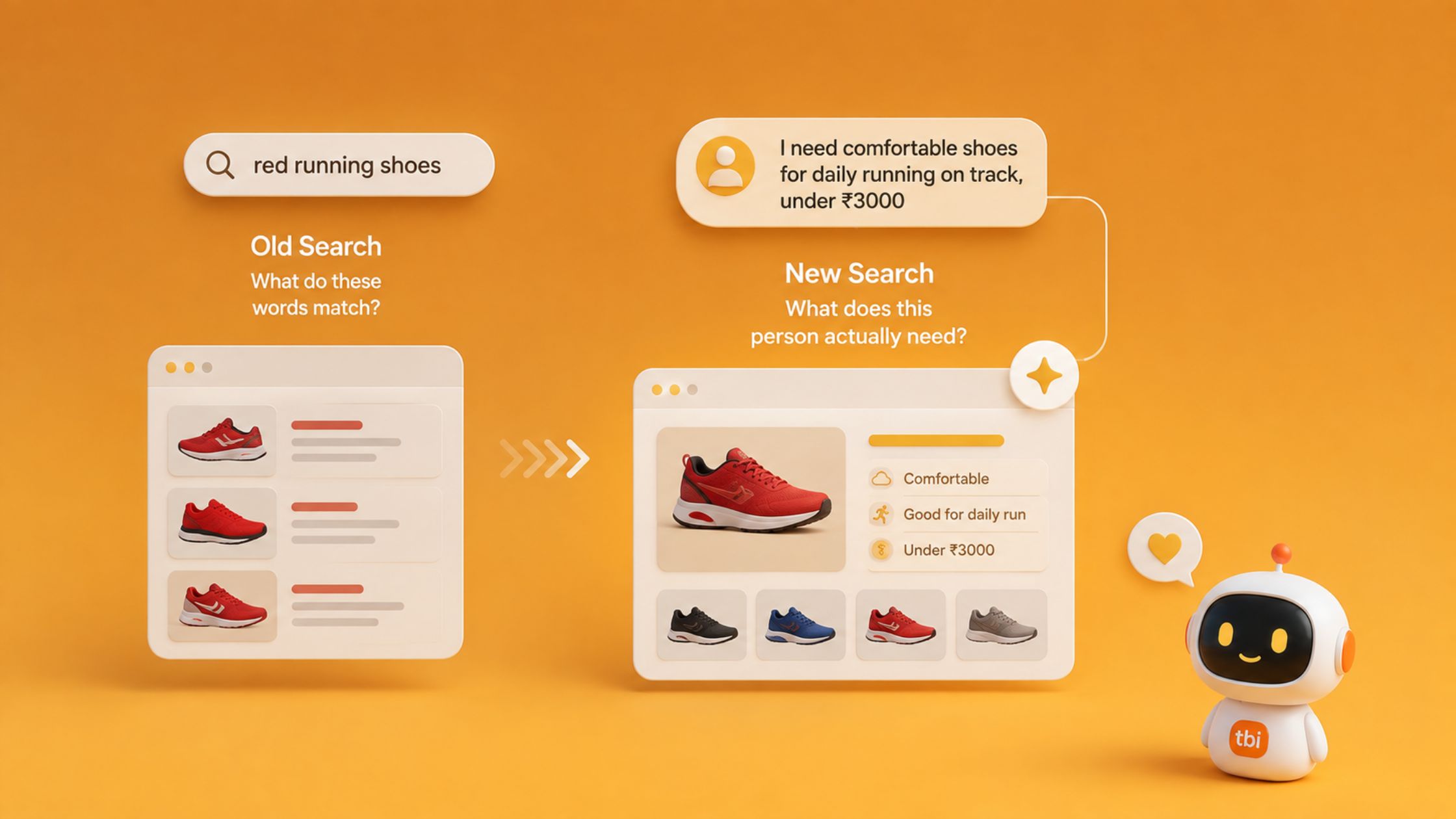
That single difference captures almost everything separating the traditional web from the intelligent web. A traditional search engine matches words. An intelligent system tries to understand intent. And once a system understands intent, it stops being a directory and starts being something closer to an advisor.
The Brihaspati Infotech sees that shift as the real story here, not the novelty of an AI chatbot giving decent shopping advice, but the fact that “search” itself is being redefined. The old question was, “What do these words match?” The new question is, “What does this person actually need?”
The Web We Grew Up With
The traditional web was built on a simple model: a person requests a page, a server returns it, and everyone who visits sees roughly the same thing. Menus were fixed. Search matched exact keywords. Recommendations, when they existed, followed basic rules like “customers who bought this also bought that.”
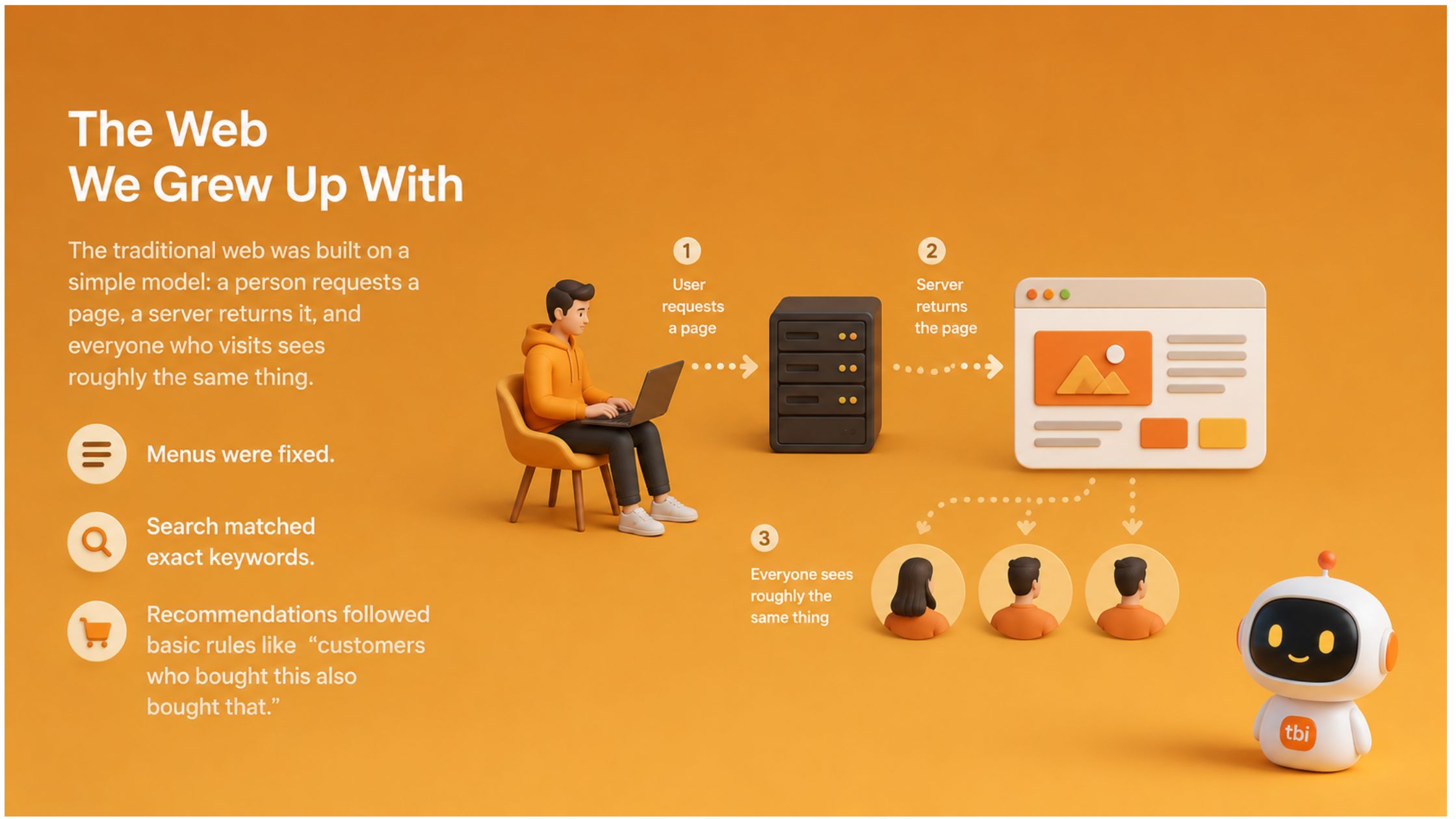
This worked because it was predictable. A business designed one experience and expected it to serve everyone reasonably well. The website behaved like a digital brochure, informative, but static. It didn’t learn from visitors, and it didn’t adjust. As the vendor experiment showed, that model leaves all the comparing, filtering, and deciding to the user.
What “Intelligent Web” Actually Means?
The intelligent web isn’t one product. It’s a shift in how websites think and respond. Instead of showing the same page to everyone, an intelligent website reads context — what someone searched for, how they’re browsing, what they asked before, and adjusts accordingly.
This runs on machine learning, natural language processing, recommendation engines, and increasingly, conversational AI agents that answer questions directly rather than pointing to a page. It’s the same behavior seen in the vendor experiment, just applied to a business’s own website instead of a third-party chatbot. A visitor types a vague question and gets a specific, useful answer, not a list of loosely related links.
OpenAI itself has been pushing this further, expanding ChatGPT so that product discovery happens inside the conversation comparing options side by side on price, reviews, and features instead of sending people off to compare tabs on their own.
The Brihaspati Infotech describes this as moving from a website that “displays” to a website that “understands.” The vendor experiment showed what that understanding looks like once it works well.
Five Real Differences Between the Two
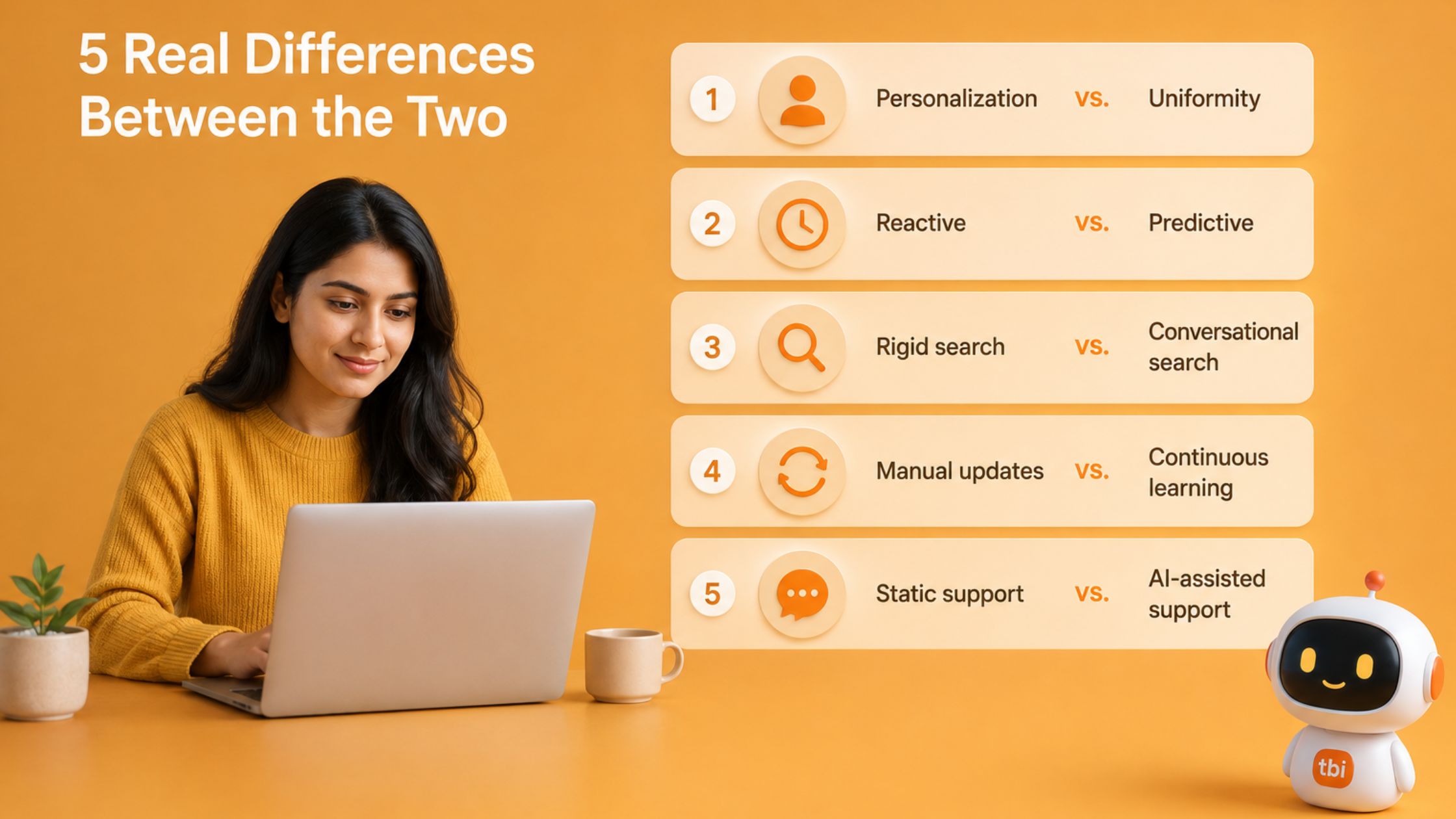
1. Personalization vs. uniformity. Traditional websites show one homepage to everyone. Intelligent websites adjust content and recommendations based on who’s asking, the same way ChatGPT tailored its answer to a parent versus a student versus a business owner.
2. Reactive vs. predictive. A traditional site waits for a click. An intelligent site anticipates the next need.
3. Rigid search vs. conversational search. Keyword search needs exact matches. Intelligent search understands intent, synonyms, and typos, and can hold something closer to a real conversation, the way the student’s textbook request was matched by author, edition, and syllabus fit rather than just title. Gartner has described this as hybrid search, combining traditional keyword retrieval with semantic understanding so systems grasp what someone actually means, not just what they typed.
4. Manual updates vs. continuous learning. Traditional websites change only when someone edits them. Intelligent systems learn from ongoing behavior.
5. Static support vs. AI-assisted support. Traditional FAQ pages leave users to dig for answers. Intelligent websites increasingly resolve questions instantly through chat assistants.
Why This Shift Is Happening Now
A few forces converged at once: affordable cloud computing, language models capable of understanding nuanced requests, and user habits shaped by tools like ChatGPT itself. Once people experienced asking a question in plain language and getting a real answer, as in the vendor experiment, going back to keyword-matching search started to feel outdated.
The Brihaspati Infotech has noticed that clients rarely ask for “AI” as a buzzword anymore. They ask for faster answers and smarter search. That’s the intelligent web, whether or not they use that exact phrase. Gartner’s own research has tracked this exact pattern, pointing to generative AI tools becoming substitute answer engines for queries that used to go through a traditional search bar.
What This Means for Businesses
The vendor experiment ended on an important point: being found isn’t the same as being understood. A business can rank well in traditional search and still lose out if an AI system can’t tell what it actually offers, who it’s for, or why it’s a good fit.
That raises the stakes for how clearly a business describes itself. It also opens an opportunity. An intelligent website can understand its visitors the way ChatGPT understood the parent, the student, and the business owner. That kind of understanding can reduce support costs, increase conversions, and surface the right option at the right moment.
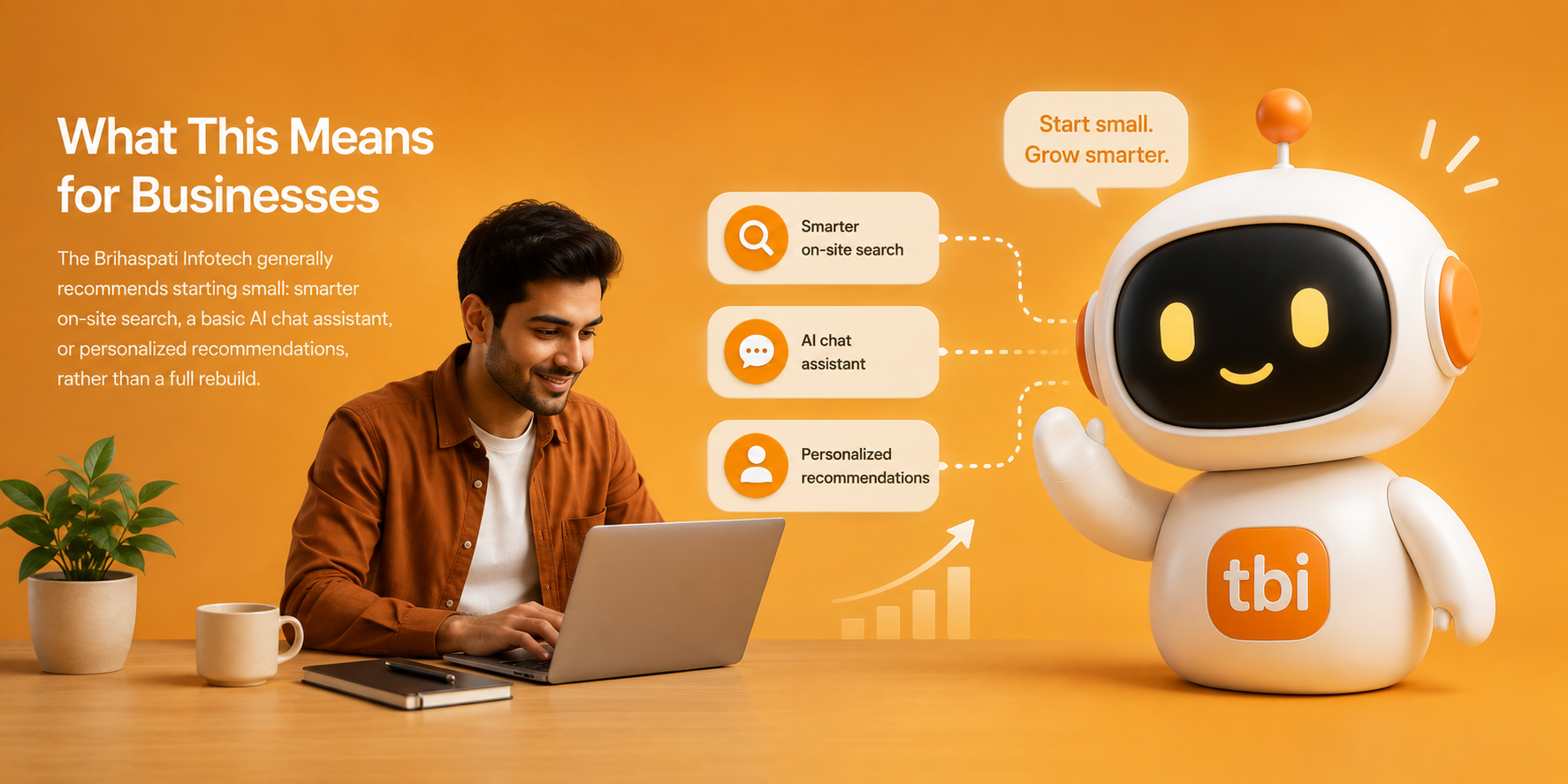
The Brihaspati Infotech generally recommends starting small. Think smarter on-site search, a basic AI chat assistant, or personalized recommendations, not a full rebuild. McKinsey’s research on personalization backs this up. Companies are increasingly turning to AI to scale relevant, real-time experiences that used to require manual, one-off effort.
Challenges Worth Knowing About
Intelligence comes with tradeoffs. Data privacy matters more when an intelligent web is tracking and learning from behavior every personalized recommendation or smart suggestion depends on collecting some signal about the user first, and that data needs to be handled responsibly.
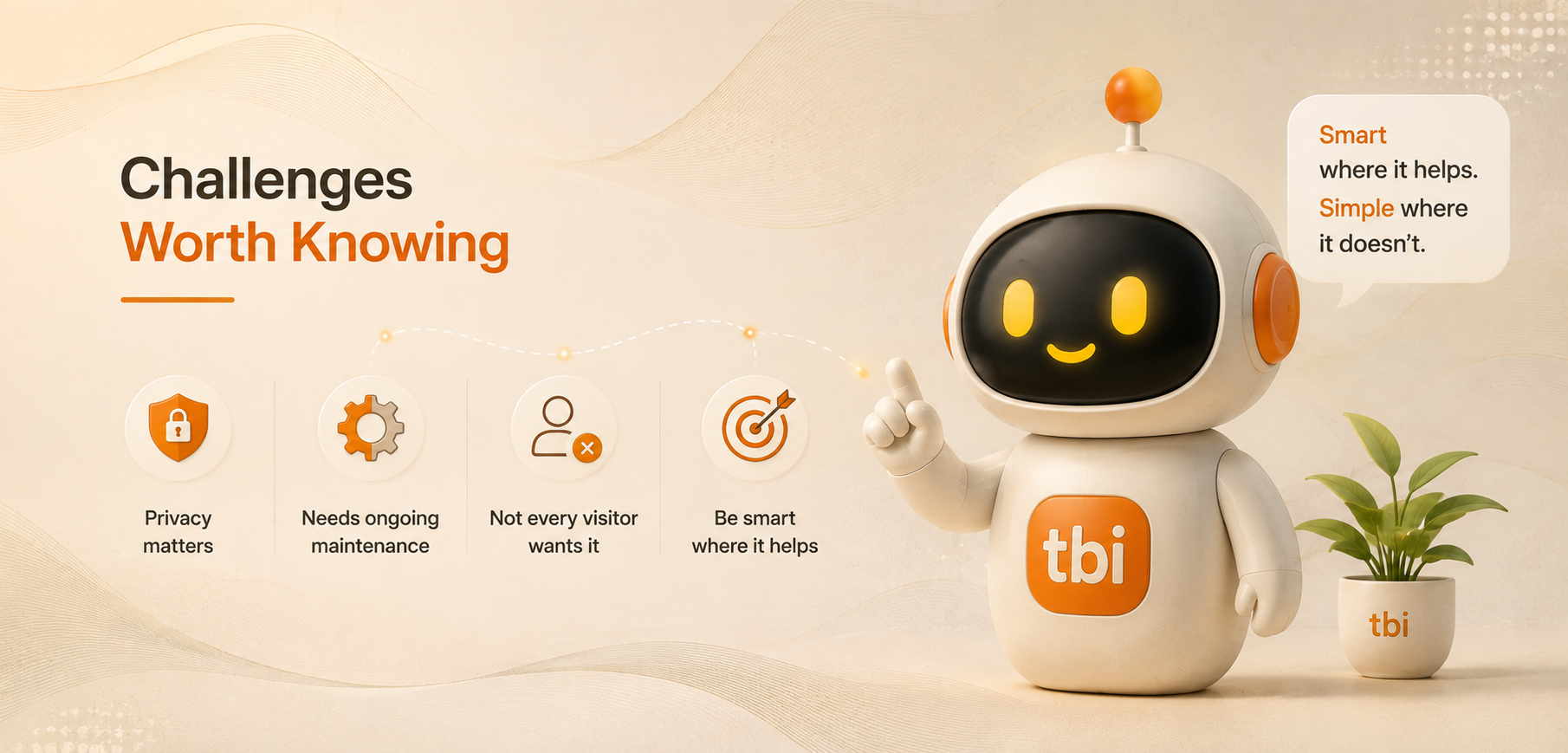
Unlike a static site that can sit untouched for months, an intelligent web requires ongoing maintenance. Models drift, recommendations go stale, and AI assistants need regular tuning, which means added cost and technical overhead a traditional website doesn’t carry.
And not every visitor wants a website guessing their intentions. Some prefer the predictability of the traditional web, where the same page shows the same thing every time. For certain audiences, an overly “smart” experience can feel invasive rather than helpful.
The goal isn’t to make every website part of the intelligent web. It’s to make it intelligent where it actually helps, and stay out of the way where it doesn’t.
Frequently Asked Questions
Maximizing Research Efficiency with AI
The AI Blog Summarizer Chrome Extension is more than a tool — it’s a productivity engine. By combining GPT-powered intelligence, dual-mode summaries, offline access, and real-time cloud synchronization, it enables researchers, students, and professionals to process content up to 5× faster while keeping insights structured, persistent, and actionable.
This project demonstrates how AI can move from a passive assistant to an integrated workflow solution, turning scattered web content into an organized, reliable knowledge base. For deeper insights into how AI is transforming workflows beyond research, check out our blog on: How AI Agents for Customer Support Drive 10× Engagement.
Looking to leverage GPT-powered solutions in your workflows? Reach out for generative AI development solutions to build custom, high-performance AI tools tailored to your business needs.