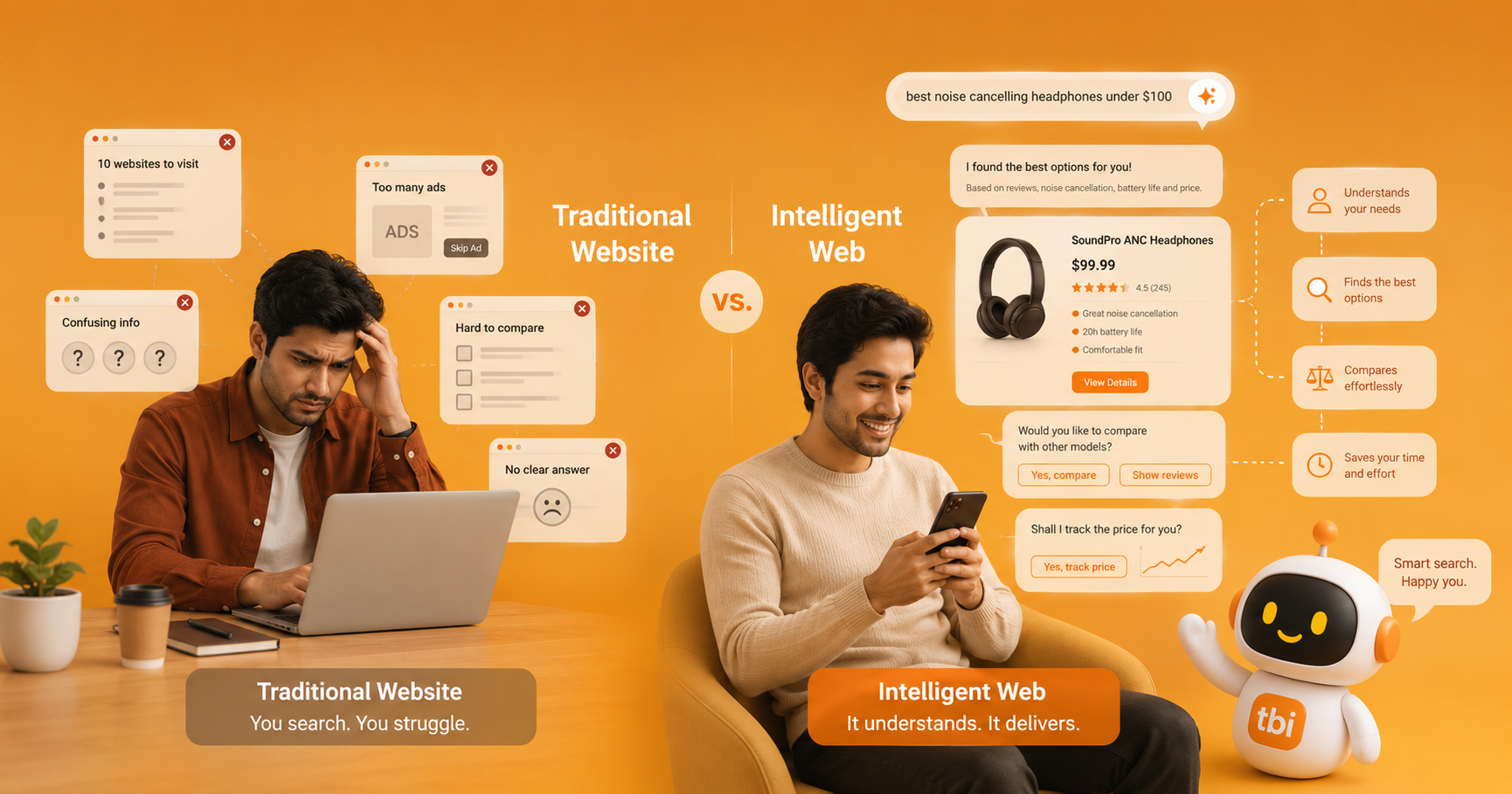

- ChatGPT gave one final pick, not a list. It compared reviews, pricing, and policies, then explained why that option won.
- The answer changed depending on who was asking. Same category, different priorities, different pick each time.
- It doesn’t search everything. It narrows fast. Out of the whole internet, it leans on a small set of trusted signals: real reviews, clear pricing, stated policies.
- Vague marketing gets skipped. Specific, checkable information gets used. Buzzwords don’t.
- Only 3 to 5 businesses get named per query. Industry audits found that 88 to 91% of businesses checked never show up in ChatGPT’s answers at all.
- Recommended brands get real traffic. ChatGPT picks see about 2.5x more site visits within a week than businesses it doesn’t recommend.
The Context
Most people still search the old way. They type a few keywords into Google, then do the rest of the work themselves: opening tabs, comparing prices, reading reviews one by one.
AI search skips most of that. A person describes what they need in plain language, and the AI compares the options before they see anything at all.
The Brihaspati Infotech wanted to know if that actually works, or if it’s just a nicer-looking list of links. So the team ran a simple test.
The Test
The Brihaspati Infotech gave ChatGPT three everyday requests, written the way a real person would actually type them: short and casual, with no detailed spec attached.
- A parent: clothes, easy returns, good discounts, fast delivery.
- A student: one specific textbook, new or used, at a fair price.
- A business owner: local movers who bring their own equipment.
ChatGPT was chosen because it’s what most people already reach for first, especially with ChatGPT search pulling in current web information. That’s not a claim it’s the best AI tool, just the most common starting point today.
What ChatGPT Did?
Rather than handing back a long list and leaving the comparing to the user, it returned a short set of options with the reasoning attached, then named one final pick.
It also paid close attention to what each person actually needed, rather than treating all three requests the same way:
| Who | Priority | What ChatGPT did |
| Parent | Returns, discounts, speed | Compared retailers on those points, picked the strongest match, and flagged a backup in case discounts mattered more. |
| Student | Exact edition, condition | Matched the edition to the syllabus, split new from used, and dropped anything that didn’t fit. |
| Business owner | Local, equipment, reviews | Compared local movers on those points and offered a documented backup option. |
The Intelligent Web
ChatGPT doesn’t scan the whole internet. It narrows fast, down to a handful of trusted signals: real reviews, clear prices, written policies. Vague pages get skipped.
The Brihaspati Infotech calls this the intelligent web. It typically names just 3 to 5 businesses per query. No page two. Not brand size, not a polished homepage. Just real, checkable information.
Out of everything on the internet, does your business stand out, or does it get filtered out?
Business Results
This shift isn’t only about shoppers. It changes how businesses get discovered.
Ranking well on Google isn’t enough anymore. The AI needs to understand the business: what it offers, how pricing works, what makes it different. A line like “we deliver innovative solutions” gives AI nothing to compare. Real prices and policies do.
This isn’t a big-brand-only game either. Clear information can beat a bigger competitor with vague pages.
Here’s what’s measured outside our own test:
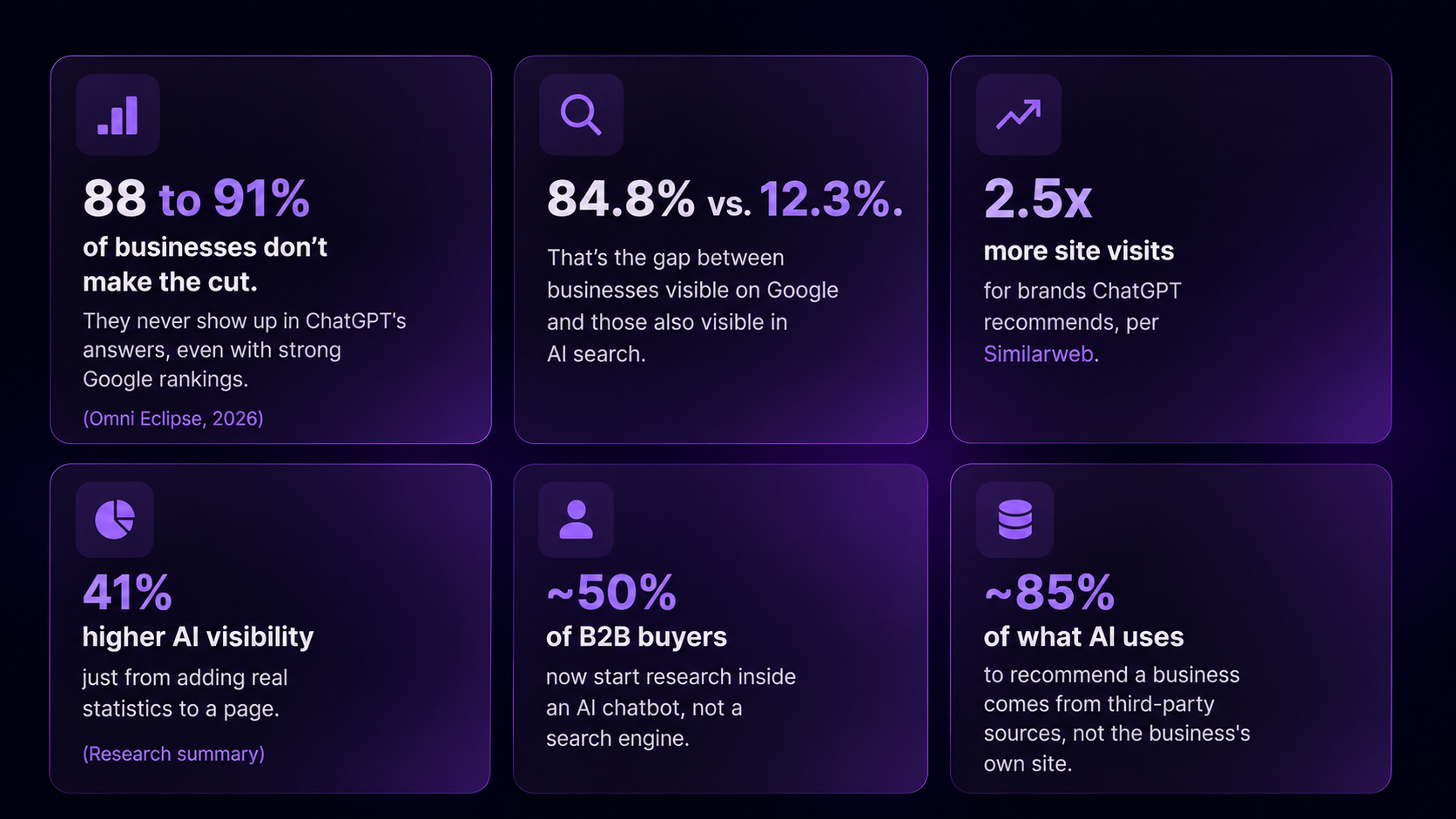
Sources: Similarweb, “The Downstream Impact of AI Visibility” (2026); Trustmary AI Visibility report (2026); Omni Eclipse AI Search Visibility Report (2026); Princeton/Georgia Tech/IIT Delhi generative engine optimization research; G2 B2B buying research; Nobori AI search visibility analysis (2026).
The Takeaway
It used to be enough to simply be findable. Now there’s a second, quieter test: does AI actually understand the business well enough to recommend it?
The next time a customer turns to AI instead of Google, the real question isn’t whether your business exists online. It’s whether AI trusts it enough to say your name out loud.
Frequently Asked Questions
Maximizing Research Efficiency with AI
The AI Blog Summarizer Chrome Extension is more than a tool — it’s a productivity engine. By combining GPT-powered intelligence, dual-mode summaries, offline access, and real-time cloud synchronization, it enables researchers, students, and professionals to process content up to 5× faster while keeping insights structured, persistent, and actionable.
This project demonstrates how AI can move from a passive assistant to an integrated workflow solution, turning scattered web content into an organized, reliable knowledge base. For deeper insights into how AI is transforming workflows beyond research, check out our blog on: How AI Agents for Customer Support Drive 10× Engagement.
Looking to leverage GPT-powered solutions in your workflows? Reach out for generative AI development solutions to build custom, high-performance AI tools tailored to your business needs.