
 By
By 
- About 68% of Google searches ended without a click in early 2026, so ranking alone no longer brings people to your site.
- Getting named inside the answer is the new goal, and it pays: cited pages earn roughly 35% more clicks than uncited ones.
- Accessibility comes first. If AI crawlers cannot reach a page, nothing else on this list matters.
- Only 38% of AI citations now come from top-ten pages, down from 76%, so smaller US businesses have a real opening.
- Mentions of your brand elsewhere on the web matter roughly three times more than backlinks.
- One popular tactic, llms.txt, shows almost no measurable effect. The data is clear on this.
THE STAKES
Why does being cited matter more than ranking?
Businesses get cited by AI search engines by making their pages easy for AI crawlers to reach, answering one question completely per section, adding schema markup, publishing their own specific numbers, and building brand mentions across the wider web. Accessibility comes first — a page that cannot be crawled cannot be quoted at all.
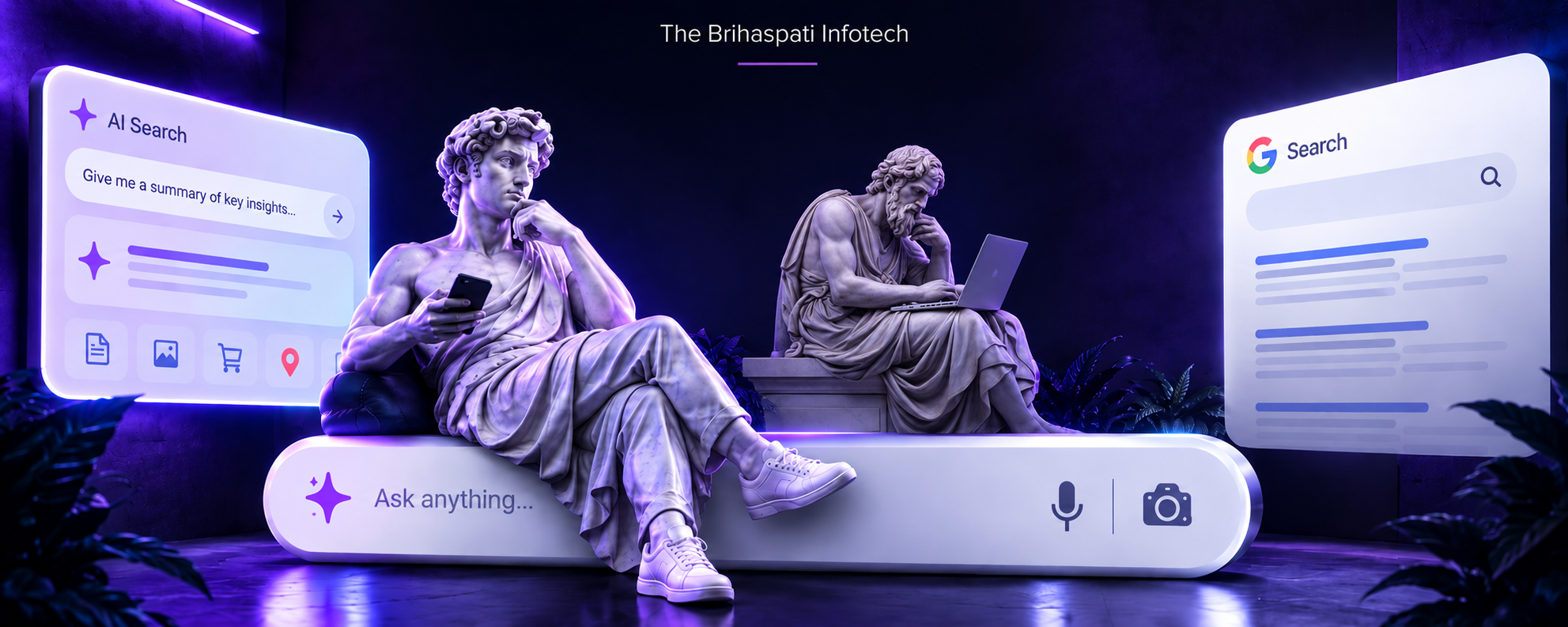
Search changed shape, and the numbers show it clearly. SparkToro’s analysis of Similarweb clickstream data found that about 68% of Google searches ended without a click in early 2026. People ask a question, read the answer at the top of the page, and move on.
So the old goal no longer works on its own. Ranking first matters far less when almost nobody scrolls down to click.
Getting named inside the answer is what counts now. And it pays well: Search Engine Land reported that pages cited inside an AI Overview earn around 35% more organic clicks than competitors who go uncited. Seer Interactive also found that visitors arriving from ChatGPT convert at a much higher rate than visitors from Google organic search, because those people already did their research inside the AI tool before clicking.
Here is the encouraging part for smaller American businesses. Ahrefs studied 863,000 keywords and found only 38% of AI citations now come from pages ranking in the top ten, down from 76%. Being the biggest site in your category matters less than it used to. Being the clearest answer matters more.
The ten steps below come from published research and from what The Brihaspati Infotech sees while building AI systems for clients. They are ordered roughly by payoff, so start at the top
STEP 1
Can AI crawlers actually reach your site?
Start here, because nothing else works if this fails.
AI systems use crawlers to read the web. If those crawlers get blocked, your page cannot be quoted — no matter how good it is. A review by Cyrus Shepard of Zyppy, which scored 23 citation factors across 54 studies, ranked accessibility as the single strongest factor.
Many US businesses block these crawlers without realizing it. A security plugin, a firewall rule, or an aggressive bot filter added years ago can quietly shut the door.
There is also a detail most people miss. Two different kinds of bots visit your site, and they do different jobs. Search bots like OAI-SearchBot, PerplexityBot and Claude-SearchBot fetch pages to answer questions right now. Training bots like GPTBot and Google-Extended collect content to train future models. If you want citations, the search bots are the ones you must let through.
Check your robots.txt file, then check your server logs to confirm these bots are actually visiting. If they are not showing up, the problem is plumbing, not writing.
STEP 2
Does your page answer one question completely?
AI systems do not quote whole pages. They lift passages.
So a page that answers one question fully, in one place, gets used far more often than a page that scatters the answer across several sections and assumes the reader started at the top.
Practitioners who track this closely have landed on a useful rule of thumb: keep each answer to roughly 40 to 60 words. That is about the size of chunk an assistant tends to lift whole. Put the answer near the top of the section, then add context and detail underneath for human readers.
A useful test: could someone copy one paragraph from your page, paste it into an email, and have it make complete sense on its own? If yes, an AI system can quote it too.
STEP 3
Are you using schema markup?
Schema markup is code that tells machines what your content means. A human sees a price on a page. Schema tells a machine “this number is a price.”
It works. In a study of 1,000 AI Overviews, DigitalApplied found that pages with schema markup were cited roughly 2.3 times more often than pages without it.
Most US small businesses need four types:
01
Organization
who you are
02
LocalBusiness
where you operate, hours, service areas
03
FAQPage
your questions and answers
04
Article
for blog posts and guides
You can find the full specifications at schema.org. If you run WordPress, plugins handle most of this for you.
One warning on FAQ schema, the question in your code must match the visible question on the page word for word. Mismatched markup gets ignored.
Where to start if you only have one afternoon
01
Unblock the crawlers
Check robots.txt and your firewall for blocked AI bots. Nothing else works until this does.
02
Add FAQ schema
Pick your five most common customer questions. Answer each in 40–60 words with matching markup.
03
Free the PDFs
Move pricing, specs and menus out of PDFs and images onto real web pages.
04
Ask the assistants
Run ten customer questions through ChatGPT and Perplexity. Write down who gets named.
STEP 4
Do you publish your own numbers?
AI systems favor content with specific, verifiable facts over general claims.
Think about it from the system’s side. It needs something concrete to quote. “We deliver excellent results” gives it nothing. “Our average install takes 6 hours and we completed 1,340 of them last year” gives it something worth repeating.
Most American small businesses sit on numbers they never publish. A roofing company knows how long a typical job takes. A dental practice knows its average wait time. A distributor knows its fill rate. Publishing those figures makes you quotable in a way competitors are not.
Research into citation patterns has found that adding statistics is one of the more effective content changes you can make, especially when paired with clear writing.
STEP 5
Is your information trapped in PDFs and images?
This one costs US businesses more citations than almost anything else, and it is usually easy to fix.
Look at how much valuable information sits in a format machines struggle with:
1
Restaurants publish menus as images
2
Distributors publish catalogs as PDFs
3
Manufacturers publish spec sheets as downloads
4
Auto parts stores hide fitment data inside JavaScript dropdowns
5
Gyms post class schedules as pictures
In each case the business owns exactly the information a customer is asking AI about, and the AI cannot read it.
The fix is not complicated. Publish the same content as regular web pages, and keep the PDF as an extra download for people who want it. The Brihaspati Infotech runs into this constantly when reviewing client sites, and it is often the single change that produces the fastest improvement.
STEP 6
Does your brand get mentioned elsewhere?
This is where AI search breaks hardest from traditional SEO.
The Zyppy review found that mentions of your brand across the wider web correlate roughly three times more strongly with AI visibility than backlinks do. Separate research found brand search volume — how many people type your company name into Google — had the highest correlation of any single factor studied.
So AI systems are not only asking “does this site rank?” They are asking “is this business talked about by other people?”
For a US small business, that means:
1
Reviews on Google, Yelp and industry platform
2
Mentions in local news and trade publications
3
Listings in chamber of commerce and association directories
4
Discussion on Reddit and industry forums
5
Podcast appearances and guest articles
None of that lives on your website. All of it affects whether you get named.
STEP 7
Do your headings match how people ask?
People talk to AI differently than they type into Google.
Into Google: dentist cost crown To ChatGPT: how much does a dental crown cost without insurance?
The second version is a full question, and matching it matters. When your heading mirrors the actual question, the system finds a clean match between what was asked and what you wrote.
So write headings as complete questions in plain language. “Pricing” becomes “How much does a crown cost without insurance?” Then answer it directly in the first two sentences underneath.
STEP 8
Is your business information consistent?
AI systems cross-check facts across sources. When they find conflicts, they often skip the business entirely rather than risk stating something wrong.
Conflicts are everywhere in US small business listings. Your website says you open at 8am, Google Business Profile says 8:30, and an old directory listing from 2019 says 9. Your site lists four service areas; your Yelp page lists two.
Audit the basics everywhere they appear: business name, address, phone, hours, services and service areas. Then clean up the old listings you forgot existed. Google Business Profile is the most important one to get right, since so much local data flows from it.
| Title | Body | |
| 1 | Your menu, catalog or price list is an image | Machines read text, not pictures. Publish it as a real page. |
| 2 | Your hours disagree across three sites | Conflicting facts make AI systems skip you rather than guess. |
| 3 | Your headings are labels, not questions | “Pricing” competes badly against “How much does it cost?” |
STEP 9
Are your key pages current?
Freshness matters, but less than most articles claim, and this is worth knowing before you waste time on it.
In DigitalApplied’s study, the median cited page was around 14 months old. So AI systems are not only quoting content published last week.
What actually matters is whether the content is still correct. Because a pricing page from 2023 that lists prices you no longer charge is a problem. A well-written explainer from 2024 that remains accurate is fine.
Review your most important pages quarterly. Update figures, dates and examples where they have changed. Skip the habit of republishing unchanged content with a new date, because that fools nobody and helps nothing.
STEP 10
How do you measure any of this?
You cannot improve what you cannot see, and standard analytics will not show you this.
Three levels, depending on budget:
Do it yourself, free. Take ten questions a customer would realistically ask before choosing a business like yours. Run each one through ChatGPT, Perplexity and Google AI Mode. Write down which companies get named, and how often you appear. Then check your server logs to confirm AI crawlers like OAI-SearchBot and PerplexityBot are actually visiting your pages. If those bots never show up, you have found your problem before spending a dollar.
Get it done for you, free. The Brihaspati Infotech runs a free AI Readiness Audit that does both of the above properly, testing your visibility across the major AI systems, checking which competitors get named instead, and identifying what is blocking citation on your site. You get the findings whether or not you take the work any further.
Pay for ongoing monitoring. Manual checks give you a snapshot. If you need to track movement week to week, dedicated tools do it automatically. Otterly.ai starts around $29 a month and suits small businesses, while Peec AI targets mid-market teams needing multi-country tracking. Enterprise platforms run considerably higher.
Start free. A manual check, or an audit, tells you whether this is urgent for your business before you commit to a monthly subscription.
THE HONEST PART
What does not work?
One tactic gets recommended constantly and does not hold up.
llms.txt is a file you place at your site root to guide AI models to your best content. It sounds sensible and costs almost nothing to add. But the evidence is weak. Google has publicly said it does not support llms.txt. One analysis of over 515 million AI bot requests found that the number touching /llms.txt was statistically negligible, the bots that drive citations essentially ignore the file.
Add it if you like, since it takes five minutes. Just do not treat it as a strategy, and be cautious of anyone selling it as one.
Moreover, two other things to watch. Republishing old content with fresh dates does nothing, as the 14-month median shows. And there is no paid placement in organic AI citations, so any agency offering guaranteed placement inside ChatGPT answers is describing something that does not exist.
What matters most, in order

Highest impact
Crawler access, a blocked page cannot be cited at all
High impact
Brand mentions across the web, roughly 3× backlinks

High impact
Structured, extractable answers with schema markup

Low impact
llms.txt, almost no measurable effect in 2026
WHERE TO GO NEXT
Putting this into practice
None of these ten steps requires rebuilding your website. Most are adjustments to content and structure you already have.
The hardest part is knowing where you stand before you start. That is why step 10 matters as much as step 1 — running ten real customer questions through the major AI tools tells you whether this is urgent for your business or something to plan for next quarter.
The Brihaspati Infotech builds production AI systems, including the retrieval architectures that decide which sources a model pulls in before answering. That work sits on the other side of the same problem described here, which is why our audits look at how these systems actually select sources rather than guessing at an algorithm from outside.
Disclaimer: References to third-party products or companies are informational and do not imply affiliation, association, endorsement or partnership.